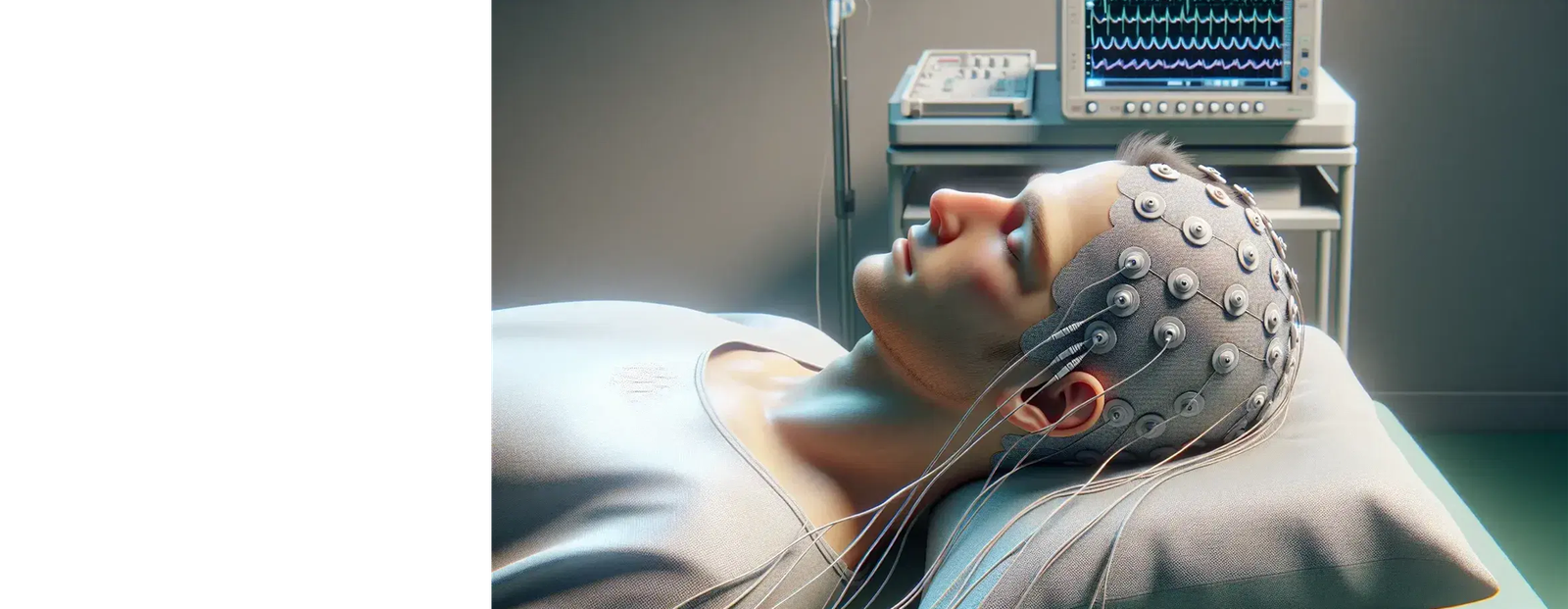
An advanced, non-invasive window into your brain's communication. We measure electrical impulses to diagnose seizures, sleep disorders, and neurological conditions with precision.
An electroencephalogram (EEG) is a specialized test that detects electrical activity in your brain using small, flat metal discs (electrodes) attached to your scalp.
Your brain cells are constantly communicating via electrical impulses—even when you are asleep. This activity shows up as wavy lines on an EEG recording.
It is one of the main diagnostic tests for epilepsy and plays a vital role in diagnosing other brain disorders. It is safe, painless, and does not put any electricity into your body.
The most common use is to detect seizure activity and type.
Diagnosing sleep issues like narcolepsy or insomnia.
Assessing activity after head injury, inflammation, or stroke.
Investigating periods of unconsciousness or memory loss.
Preparing for your EEG
To ensure a clear reading, please follow these simple steps before your appointment.
Wash your hair the night before or the day of the test. Do not use any conditioner, hair cream, spray, or styling gels. These products make it hard for the sticky patches to adhere to your scalp.
Avoid food or drinks containing caffeine (coffee, tea, cola, chocolate) for at least 8 hours before the test, as it can alter brain wave patterns.
Take your usual medications unless instructed otherwise. If you are supposed to sleep during the EEG, your doctor may ask you to sleep less or not at all the night before.
Performed by skilled technicians and analyzed by consultant neurologists.