Experiencing numbness, tingling, or muscle weakness? Our advanced diagnostic tests pinpoint the root cause of nerve and muscle disorders with pinpoint accuracy.
While often performed together, EMG and NCT look at different aspects of your neuromuscular health.
EMG measures muscle response or electrical activity in response to a nerve’s stimulation. It helps detect neuromuscular abnormalities by "listening" to your muscles.
A small, thin needle electrode is inserted through the skin into the muscle. You may feel a quick pinch. You will be asked to contract (tighten) the muscle while the activity is recorded.
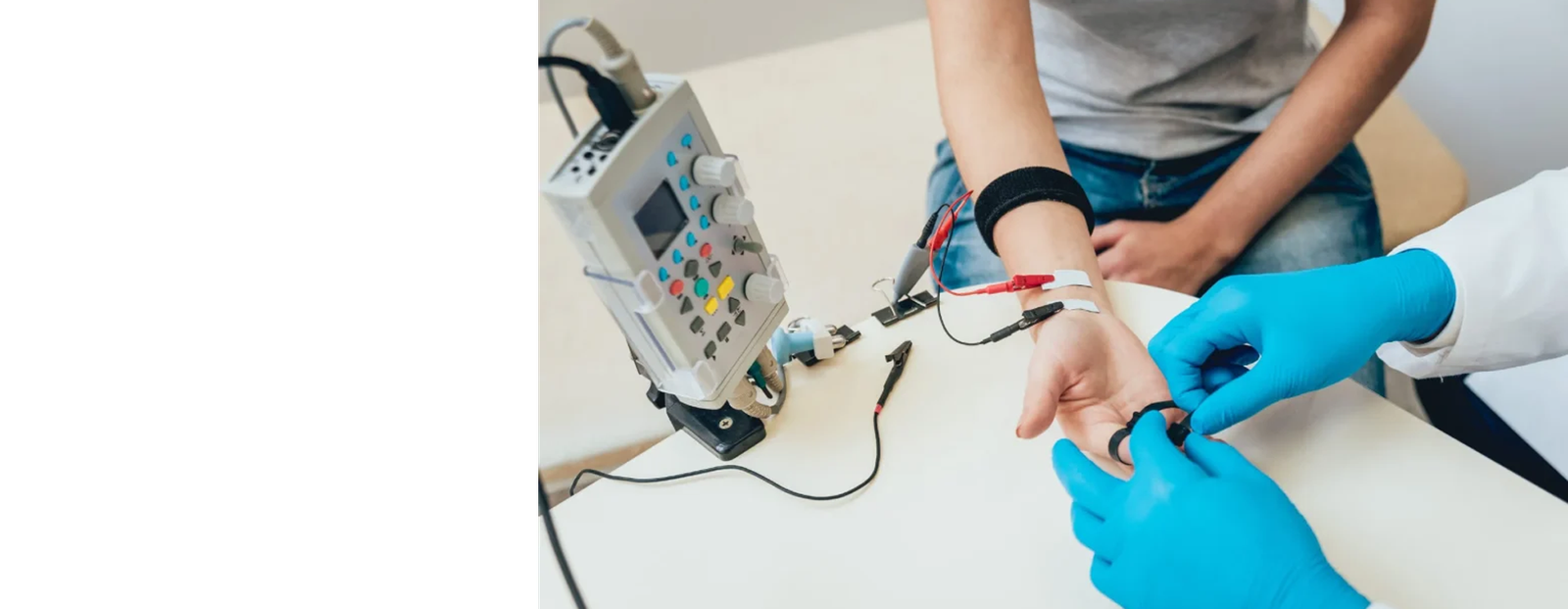
NCT measures how fast and strong the electrical activity travels through a nerve. It helps identify nerve damage or blockage.
No needles are used. Sticky patches (electrodes) are placed on the skin. A mild electrical pulse stimulates the nerve, which may feel like a small static shock or tingle.
These tests provide critical data to help your doctor manage and treat various conditions affecting the nervous system.
Nerve compression in the wrist causing hand numbness.
Pinched nerve roots in the lower back affecting the legs.
Conditions affecting the connection between nerve and muscle.
Nerve damage often associated with diabetes.
Please follow these instructions to ensure the electrodes can adhere properly and give accurate readings.
Do not apply any body lotion, oil, or cream on the day of the test. The skin must be dry and clean for electrodes to stick.
Wear loose-fitting clothes that can be easily rolled up to access your arms or legs.
Let us know if you have a pacemaker, are on blood thinners (like Warfarin), or have hemophilia.
Our expert neurophysiologists are here to guide you through the process.